
Arcot Road, Chennai—From Ancient Military Route to Modern Urban Corridor
The Evolution: Then & Now
-
Arcot Road, one of Chennai's oldest arterial roads, dates back to the 1750s and once served as a key military route during the Arcot Wars.
-
The road witnessed generations of traders, commuters, and stories woven into its path. It was the lifeline of neighborhoods like Kodambakkam and Valasaravakkam.
Old Arcot Road (The Heritage): In the 1860s, it was documented as a vital trade route connecting
The road witnessed generations of traders, commuters, and stories woven into its path. It was the lifeline of neighborhoods like Kodambakkam and Valasaravakkam.
Nungambakkam to Arcot via the Chembarambakkam Tank. By the 1940s, it became a paved arterial road, sparking the growth of areas like Kodambakkam and Vadapalani.
New Arcot Road (The Future): The road is currently undergoing a massive transformation with the Chennai Metro Phase II construction. By July 2026, a 4 km double-decker corridor between Porur and Kodambakkam will allow four trains to run simultaneously on two levels, drastically reducing travel time through this busy belt
Beaver Construction's Modern Contribution


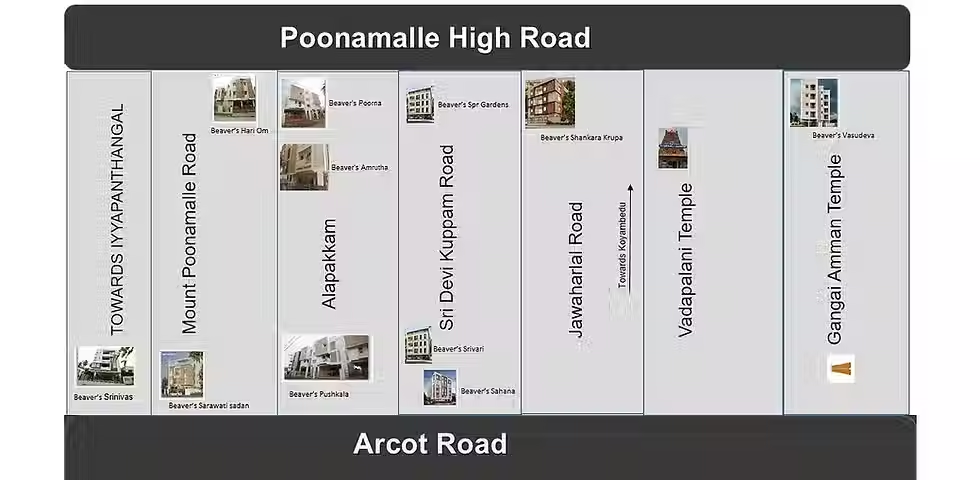

From Wetlands to Wealth: The Economic Impact of Velachery’s Growth and Beaver Construction’s Influence
Then: Foundations of a Humble Beginning


Featured Project: Sundaravilas, Velachery
Lifestyle Advantages
-
Close proximity to Phoenix Marketcity Chennai and Palladium Chennai
-
Nearby reputed institutions like Guru Nanak College
-
Access to top healthcare including Apollo Proton Cancer Centre
-
Peaceful surroundings with urban convenience
Why Sundaravilas ?
-
Sundaravilas is crafted for those who seek the following:
-
Quality construction and durability
-
Prime location benefits
-
Comfortable and modern lifestyle spaces
-
High investment potential in a growing locality

Our Vision for Velachery
-
Beaver Construction sees Velachery not just as a location—but as an opportunity to create enduring value.
-
We aim to contribute by developing:
-
Modern gated communities designed for comfort and security
-
Sustainable living spaces that blend design with functionality
-
Homes that reflect quality craftsmanship and long-term reliability
The Argument Continues: Red Bricks vs. AAC blocks
Walk past any construction site in India and you will see one of two things going up — deep red clay bricks, or the pale grey panels of AAC blocks. Both materials claim to be the better wall. The debate has no clean ending, but it does have a clear logic.
Where the argument begins: Red bricks are not just a building material—they are a tradition.

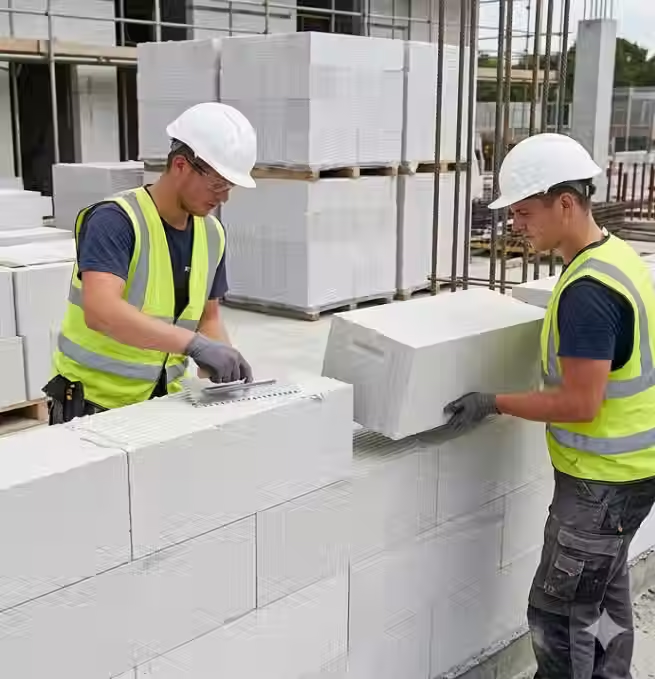
For centuries, kilns across India have produced clay bricks fired at high temperatures, resulting in a dense, hard unit that masons have grown to know by touch.
The material is forgiving, abundant, and deeply trusted. A first-time homebuilder in rural Tamil Nadu or a contractor in Uttar Pradesh will reach for red bricks almost by instinct.
The material is forgiving, abundant, and deeply trusted. A first-time homebuilder in rural Tamil Nadu or a contractor in Uttar Pradesh will reach for red bricks almost by instinct
AAC blocks entered the Indian market seriously only in the 2000s, but their adoption has been rapid, especially in cities.
Made from a mixture of fly ash, cement, lime, sand, and aluminum powder—then cured under high-pressure steam—these blocks are lighter, more uniform, and engineered to perform in specific ways that red bricks cannot.
-
The argument that follows is not about which is better in the abstract. It is about which is better for a specific site, budget, climate, and builder.

The Argument Continues
Much of the argument between red bricks and AAC blocks follows a simple geography. In rural India — where construction projects are smaller, budgets are tighter, and AAC blocks may not even be available within a practical distance — red bricks remain the logical choice. The infrastructure to support AAC, from factory supply chains to trained masons, has not yet reached every district.
In urban India, the picture has shifted decisively. Developers building apartments, villas, and commercial structures increasingly specify AAC blocks for the floors above the plinth. The combination of speed, weight reduction, insulation, and sustainability credentials appeals to buyers, green rating systems, and structural engineers alike. In many Indian cities today, AAC blocks are no longer the alternative — they have become the default.


When to choose each
Pros of Red Bricks
-
Traditional Strength
-
Red bricks are highly durable and can withstand heavy loads, making them ideal for long-lasting structures
-
They help keep interiors cooler in hot climates and warmer in cold weather—great for places like Chennai.
-
Bricks are non-combustible, which means they offer excellent protection against fire.
-
They absorb and release moisture naturally, helping regulate humidity inside buildings.
-
Red bricks provide excellent adhesion with mortar, resulting in strong and stable walls.
-
Made from natural clay, they are biodegradable and have a lower environmental impact compared to many modern materials.
-
Red bricks are widely available and generally affordable, making them a practical choice for construction.
Cons of Red Bricks
-
Increases the overall load on the structure, leading to higher foundation costs.
-
Small size and uneven shape require more cement mortar.
-
Brick-by-brick work takes more time compared to larger blocks.
-
Can lead to dampness and seepage if proper waterproofing is not done.
-
Requires thicker plastering to achieve a smooth finish.
-
Not as thermally efficient as AAC blocks, especially in hot climates.
-
Use of topsoil and traditional kilns contributes to pollution.
-
Strength and durability can vary depending on manufacturing quality.
Pros of AAC Blocks
-
AAC blocks are much lighter than red bricks, reducing structural load and saving on foundation costs.
-
Keeps interiors significantly cooler—perfect for hot climates like Chennai, reducing AC usage.
-
Larger block size means quicker installation and reduced labor time.
-
Uniform shape and size require thinner joints, saving cement and sand.
-
Highly fire-resistant, offering strong safety for buildings.
-
Made using fly ash (industrial waste), reducing environmental impact.
-
Even surfaces reduce the need for thick plastering, lowering finishing costs.
-
Easy to cut, drill, and shape for electrical and plumbing work
Cons of AAC Blocks
-
AAC blocks are usually more expensive per unit compared to red bricks.
-
Not as strong as traditional red bricks for heavy load-bearing walls (often requires RCC frame structure).
-
Needs thin-bed adhesive instead of regular cement mortar, which may increase cost or require trained labor.
-
Can absorb moisture if left exposed—proper plastering and curing are important.
-
Hanging heavy items (like cupboards, TVs) requires special fasteners or anchors.
-
Improper installation or curing can lead to surface cracks.
-
Not as widely available as red bricks in all regions (though common in cities).
-
Requires trained workers for proper installation and finishing.
The argument continues not because one side is wrong but because both sides are right—in different contexts. Red bricks built the country. AAC blocks are building their next chapter. Understanding which chapter your project belongs to is the only decision that really matters.
Which makes sense for the layout purchase of the plotted development or flat for living
Where Should My Family Actually Live — On a Plot or In a Flat?
This isn't a debate between two asset classes. It's a question about how you want to spend your mornings, raise your children, and use your money over the next twenty years
Land + your construction
Plotted Development


Land + your construction Plotted Development

Plotted Development


-
Beaver Construction's Modern Contribution
Most articles frame this as "plot vs. flat as an investment." We are not doing that. Both can appreciate. Both can disappoint. What matters far more is whether the home you choose fits the way your family actually lives—your budget today, your plans for the next decade, your tolerance for construction headaches, and the city you are in
-
Beaver Sahana (Maduravoyal): A modern 5-floor residential project offering 2 BHK flats (1,000 sq. ft.). It features sustainable amenities like solar-powered common areas and is located in a peaceful residential pocket near the major Arcot Road hubs.
-
Beaver Srinivas (Iyyapanthangal): A modern 3-floor residential project offering 2 BHK flats, residential apartments, well-planned homes, peaceful neighborhoods, and Good connectivity
-
Beaver Saraswathi Sadan (Porur): Residential Apartment | Modern design | Serene living | Easy city access
-
Beaver Hari Om (Mugalivakkam): 2-floor residential project offering 2.5-bedroom apartment projects | Quality construction | Calm residential area
-
Beaver Poorna (Maduravoyal): Residential Project | Spacious homes | Well-connected locality
-
Beaver Amrita: Modern Apartment (Maduravoyal) | Comfortable living | Lifestyle amenities
-
Beaver Pushkala (Maduravoyal): Premium Apartments | Family-friendly | Spacious & well-connected
-
Beaver Srivari (Valasaravakkam): A modern upcoming 3-floor residential project 2bhk flats Residential Development |Close to key hubs
-
SPR Gardens (Valasaravakkam): Residential Community | Well-designed homes | Prime location
-
Beaver Shankara Krupa (Saligramam): 3-floor residential project offering 3 BHK (1700 SQ.FT) flats & 2 BHK (910 SQ.FT) flats, residential apartments, comfortable urban living, and a well-connected area
-
Beaver Vasudeva (Vadapalani): 4-floor residential project, modern housing, quality homes, good connectivity & convenience
A QUINTESSENTIAL AGRAHARAM TO UPWARDLY MOBILE NEIGHBOURHOOD -WEST MAMBALAM
West Mambalam - Then 1960s & 1970s
West Mambalam: From Mosquitoes, Buffaloes & Ayodhya Mandapam to Temple bells & Rising towers
West Mambalam of the 60s - 70s was always known as a neighborhood that smelled of bilva leaves and cow dung; not glamorous. The lanes that would one day command ₹15,000 per sq ft were, back then, patchy mud paths shared by Brahmin families, wandering buffaloes, and clouds of persistent mosquitoes that descended at dusk with the reliability of a vespers bell.
-
Velachery, nestled in the southern corridor of Chennai, traces its roots back to a serene agrarian settlement.
-
Known for its cultural depth and natural resources like the Velachery Lake, the locality once thrived as a quiet, community-driven neighborhood.
-
Historic landmarks such as the Selliamman Temple reflect its deep heritage, while its early landscape was defined by open spaces, water bodies, and traditional living.

"The better question is not which one grows faster in value. It is which one lets you live well without regret — for the fifteen or twenty years you will actually spend there."
Ayodhya Mandapam: Where The Music Lived
Then
If one building defined West Mambalam's cultural identity in the 1960s and 70s, it was Ayodhya Mandapam.
Every Margazhi season, its stone floors filled with the sound of veena and violin. The sabha was the neighborhood's living room for anyone who cared about Carnatic music—which, in West Mambalam, was nearly everyone.
Visiting vidwans from Thanjavur and Tiruvarur were received with the ceremony due to royalty. The mangoes from the sabha courtyard tree were considered especially sweet.
West Mambalam today has the old charm of Agraharam dotted with temples and spiritual activities—moving, steadily and unmistakably, towards upwardly mobile real estate.

Now
-
Ayodhya Mandapam shaped West Mambalam’s identity, especially during Margazhi, with veena and violin filling the air. Despite urban change, West Mambalam retains its roots.
-
Temples like Kashi Viswanathar still anchor the streets. The last bilva tree continues to symbolize its origin and heritage.
Real Estate Surge - The Upwardly Mobile Turn
-
Property values are climbing steadily—IT professionals and returning NRIs choose connectivity over glamour.
-
The transformation has been consistent and steady, witnessing new trends of acceleration in the last decade. Mambalam Railway Station—the fourth busiest in Chennai—means a 20-minute commute to the city center.
-
The proximity to T. Nagar gives residents the commercial density of Chennai's busiest district without living inside its noise. Property values have climbed steadily, and the demographic shift is visible: young IT couples, retired parents, returning NRIs, and families show a healthy, homogenous mix that has been priced out of other localities like Adyar or Anna Nagar.
-
The magic of West Mambalam is that it has earned its future without selling its past. The mosquitoes are (mostly) gone. The buffaloes are gone. Ayodhya Mandapam remains—still standing, still musical, now surrounded by towers that did not exist when its stone floors first vibrated with the sound of a veena.
-
Beaver Construction's Modern Contribution


From Wetlands to Wealth: The Economic Impact of Velachery’s Growth and Beaver Construction’s Influence
Then: Foundations of a Humble Beginning

🏡 Plotted Development
●You own the land outright—a finite, non-producible asset in a growing city
●Full design freedom: floor plan, height (within FSI), materials, future expansion
●Lower monthly cost if you sit on the land before building
●Building phase adds significant cost, time and management burden
●Not move-in ready — unsuitable if you need a home now
●Harder to finance—banks lend less, at higher rates, for plot-only purchases


Now: The Transformation of velachery , From quiet settlement to modern hub
-
Today, Velachery stands as a symbol of Chennai’s urban evolution—strategically located near Old Mahabalipuram Road, the city’s thriving IT hub.
-
Its transformation into a premium residential and commercial hotspot has been fueled by infrastructure growth and proximity to leading corporations.
-
From seamless connectivity to Chennai International Airport to world-class lifestyle destinations like Phoenix Marketcity Chennai, Velachery offers everything modern urban living demands.

Featured Project: Sundaravilas, Velachery
Introducing Sundaravilas by Beaver Construction — a thoughtfully designed residential project that brings together modern living, comfort, and long-term value in the heart of Velachery. Pet Highlights
-
Premium gated residential development, Contemporary architecture with efficient space planning
-
Located in a well-connected residential neighborhood
-
Easy access to OMR, MRTS, and key city zones
Lifestyle Advantages
-
Close proximity to Phoenix Marketcity Chennai and Palladium Chennai
-
Nearby reputed institutions like Guru Nanak College
-
Access to top healthcare including Apollo Proton Cancer Centre
-
Peaceful surroundings with urban convenience
Why Sundaravilas ?
-
Sundaravilas is crafted for those who seek:
-
Quality construction and durability
-
Prime location benefits
-
Comfortable and modern lifestyle spaces
-
High investment potential in a growing locality

Our Vision for Velachery
We aim to contribute by developing:
-
Modern gated communities designed for comfort and security
-
Sustainable living spaces that blend design with functionality
-
Homes that reflect quality craftsmanship and long-term reliability
The Argument Continues: Red Bricks vs. AAC blocks
Walk past any construction site in India and you will see one of two things going up — deep red clay bricks, or the pale grey panels of AAC blocks. Both materials claim to be the better wall. The debate has no clean ending, but it does have a clear logic.
Where the argument begins Red bricks are not just a building material—they are a tradition.
For centuries, kilns across India have produced clay bricks fired at high temperatures, resulting in a dense, hard unit that masons have grown to know by touch.
The material is forgiving, abundant, and deeply trusted. A first-time homebuilder in rural Tamil Nadu or a contractor in Uttar Pradesh will reach for red bricks almost by instinct.
-
The argument that follows is not about which is better in the abstract. It is about which is better for a specific site, budget, climate, and builder.
AAC blocks entered the Indian market seriously only in the 2000s, but their adoption has been rapid, especially in cities.
Made from a mixture of fly ash, cement, lime, sand, and aluminium powder — then cured under high-pressure steam — these blocks are lighter, more uniform, and engineered to perform in specific ways that red bricks cannot.
-
The Argument Continues
Much of the argument between red bricks and AAC blocks follows a simple geography. In rural India — where construction projects are smaller, budgets are tighter, and AAC blocks may not even be available within a practical distance — red bricks remain the logical choice. The infrastructure to support AAC, from factory supply chains to trained masons, has not yet reached every district.
In urban India, the picture has shifted decisively. Developers building apartments, villas, and commercial structures increasingly specify AAC blocks for the floors above the plinth. The combination of speed, weight reduction, insulation, and sustainability credentials appeals to buyers, green rating systems, and structural engineers alike. In many Indian cities today, AAC blocks are no longer the alternative — they have become the default.
When to choose each
Beaver Construction sees Velachery not just as a location—but as an opportunity to create enduring value.
Pros of Red Bricks
-
Traditional Strength
-
Red bricks are highly durable and can withstand heavy loads, making them ideal for long-lasting structures
-
They help keep interiors cooler in hot climates and warmer in cold weather—great for places like Chennai.
-
Bricks are non-combustible, which means they offer excellent protection against fire.
-
They absorb and release moisture naturally, helping regulate humidity inside buildings.
-
Red bricks provide excellent adhesion with mortar, resulting in strong and stable walls.
-
Made from natural clay, they are biodegradable and have a lower environmental impact compared to many modern materials.
-
Red bricks are widely available and generally affordable, making them a practical choice for construction.
Cons of Red Bricks
-
Increases the overall load on the structure, leading to higher foundation cost.
-
Small size and uneven shape require more cement mortar.
-
Brick-by-brick work takes more time compared to larger blocks.
-
Can lead to dampness and seepage if proper waterproofing is not done.
-
Requires thicker plastering to achieve a smooth finish.
-
Not as thermally efficient as AAC blocks, especially in hot climates.
-
Uses topsoil and traditional kilns contribute to pollution.
-
Strength and durability can vary depending on manufacturing quality.
Pros of AAC Blocks
-
AAC blocks are much lighter than red bricks, reducing structural load and saving on foundation costs.
-
Keeps interiors significantly cooler—perfect for hot climates like Chennai, reducing AC usage.
-
Larger block size means quicker installation and reduced labor time.
-
Uniform shape and size require thinner joints, saving cement and sand.
-
Highly fire-resistant, offering strong safety for buildings.
-
Made using fly ash (industrial waste), reducing environmental impact.
-
Even surfaces reduce the need for thick plastering, lowering finishing costs.
-
Easy to cut, drill, and shape for electrical and plumbing work.
Pros of AAC Blocks
Cons of AAC Blocks
-
AAC blocks are usually more expensive per unit compared to red bricks.
-
Not as strong as traditional red bricks for heavy load-bearing walls (often requires RCC frame structure).
-
Needs thin-bed adhesive instead of regular cement mortar, which may increase cost or require trained labor.
-
Can absorb moisture if left exposed—proper plastering and curing are important.
-
Hanging heavy items (like cupboards, TVs) requires special fasteners or anchors.
-
Improper installation or curing can lead to surface cracks.
-
Not as widely available as red bricks in all regions (though common in cities).
-
Requires trained workers for proper installation and finishing.
Which makes sense layout purchase of the plotted development or flat for living
The argument continues not because one side is wrong but because both sides are right—in different contexts. Red bricks built the country. AAC blocks are building their next chapter. Understanding which chapter your project belongs to is the only decision that eally matters.
Where Should My Family Actually Live — On a Plot or In a Flat?
This isn't a debate between two asset classes. It's a question about how you want to spend your mornings, raise your children, and use your money over the next twenty years
Land + your construction
Plotted Development

vs
Plotted Development
Land + your construction Plotted Development
Plotted Development
Most articles frame this as "plot vs flat as an investment." We are not doing that. Both can appreciate. Both can disappoint. What matters far more is whether the home you choose fits the way your family actually lives — your budget today, your plans for the next decade, your tolerance for construction headaches, and the city you are in.
"The better question is not which one grows faster in value. It is which one lets you live well without regret — for the fifteen or twenty years you will actually spend there."
🏡 Plotted Development
●You own the land outright—a finite, non-producible asset in a growing city
●Full design freedom: floor plan, height (within FSI), materials, future expansion
●Lower monthly cost if you sit on the land before building
●Building phase adds significant cost, time and management burden
●Not move-in ready — unsuitable if you need a home now
●Harder to finance—banks lend less, at higher rates, for plot-only purchases
🏢Apartment / Flat
●Move-in ready (or near-ready) — solve your housing need immediately
●Easier home loan — 80–90% financing, competitive rates, longer tenors
●Amenities, security, maintenance covered by society infrastructure
●You own a share of land — undivided, not exclusive to you
●Monthly maintenance charges, sinking fund, society levies add up
●Limited freedom to modify structure; governed by society rules
Absentee Landlordism in Plotted Development
Our Take


At Beaver Construction Company, we see many investors buy plots as long-term assets without actively living on or managing them. This is called absentee landlordism—owning land while staying distant from it
Plotted development is more than an investment—it’s a chance to create a legacy.
You can wait for value to grow passively, or build, live, and shape your space. At Beaver Construction Company, we help you turn land into a home, a lifestyle, and long-term wealth.
Rethinking Real Estate: It’s Not Land vs Flat — It’s Accessibility vs Affordability
When it comes to real estate decisions, the debate is often framed as plots vs flats — land versus apartments, independence versus convenience. But this comparison misses the real question.
Let us reframe it.
This is not a comparison between two asset classes — land (plots) and flats (land + building).
Instead, it is a conversation about accessibility and affordability
Because at the end of the day, every buyer—especially a first-time buyer—is balancing what they can reach today versus what they aspire to build tomorrow
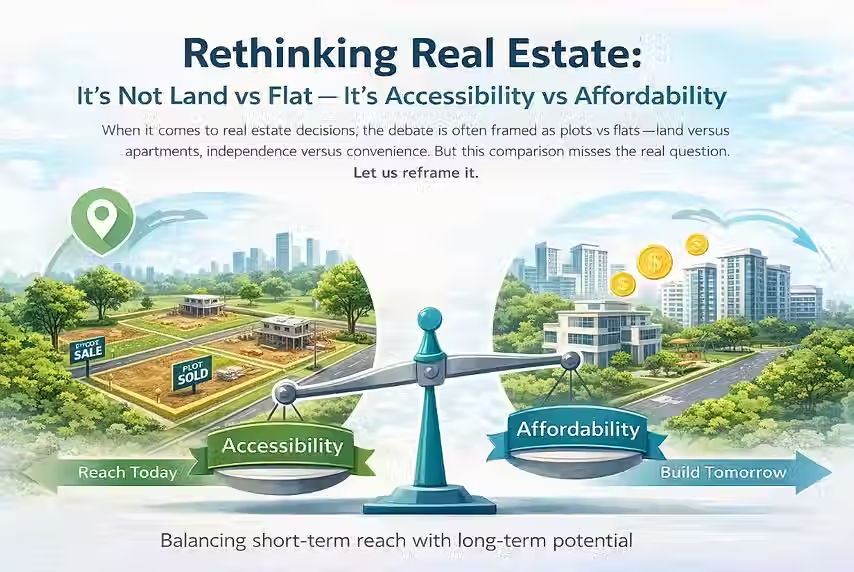
Understanding the Shift: Accessibility vs Affordability
-
Flats represent accessibility:
Immediate usability, urban living, and easier entry into real estate. -
Plots (Land) represent affordability and future potential:
Lower entry cost (in many cases), flexibility, and long-term appreciation.
Your decision is not about which is better—it’s about which aligns with your current life stage and financial comfort.
Advantages of Buying flats
Understanding the Shift: Accessibility vs Affordability
-
Flats represent accessibility:
Immediate usability, urban living, and easier entry into real estate.
-
Plots (Land) represent affordability and future potential:
Lower entry cost (in many cases), flexibility, and long-term appreciation.
Your decision is not about which is better—it’s about which aligns with your current life stage and financial comfort.


Advantages of Buying Land (Plots)
Higher Appreciation Potential: Land value typically grows faster
· Full Ownership: No shared walls or common ownership
· Flexibility: Build when you are ready
· Customization: Design your dream home
· Lower Maintenance Costs
West Mambalam: From Mosquitoes, Buffaloes & Ayodhya Mandapam to Temple bells & Rising towers
West Mambalam of the 60s - 70s was always known as a neighborhood that smelled of bilva leaves and cow dung; not glamorous. The lanes that would one day command ₹15,000 per sq ft were, back then, patchy mud paths shared by Brahmin families, wandering buffaloes, and clouds of persistent mosquitoes that descended at dusk with the reliability of a vespers bell.
Ayodhya Mandapam: Where The Music Lived
Then
If one building defined West Mambalam's cultural identity in the 1960s and 70s, it was Ayodhya Mandapam.
Every Margazhi season, its stone floors filled with the sound of veena and violin. The sabha was the neighborhood's living room for anyone who cared about Carnatic music—which, in West Mambalam, was nearly everyone.
Visiting vidwans from Thanjavur and Tiruvarur were received with the ceremony due to royalty. The mangoes from the sabha courtyard tree were considered especially sweet.
West Mambalam today has the old charm of Agraharam dotted with temples and spiritual activities—moving, steadily and unmistakably, towards upwardly mobile real estate.
Now
-
Ayodhya Mandapam shaped West Mambalam’s identity, especially during Margazhi, with veena and violin filling the air. Despite urban change, West Mambalam retains its roots.
-
Temples like Kashi Viswanathar still anchor the streets. The last bilva tree continues to symbolize its origin and heritage.
Real Estate Surge - The Upwardly Mobile Turn
-
Property values are climbing steadily—IT professionals and returning NRIs choose connectivity over glamour.
-
The transformation has been consistent and steady, witnessing new trends of acceleration in the last decade. Mambalam Railway Station—the fourth busiest in Chennai—means a 20-minute commute to the city center.
-
The proximity to T. Nagar gives residents the commercial density of Chennai's busiest district without living inside its noise. Property values have climbed steadily, and the demographic shift is visible: young IT couples, retired parents, returning NRIs, and families show a healthy, homogenous mix that has been priced out of other localities like Adyar or Anna Nagar.
-
The magic of West Mambalam is that it has earned its future without selling its past. The mosquitoes are (mostly) gone. The buffaloes are gone. Ayodhya Mandapam remains—still standing, still musical, now surrounded by towers that did not exist when its stone floors first vibrated with the sound of a veena.
Beaver Construction's Modern Contribution
-
Velachery, nestled in the southern corridor of Chennai, traces its roots back to a serene agrarian settlement.
-
Known for its cultural depth and natural resources like the Velachery Lake, the locality once thrived as a quiet, community-driven neighborhood.
-
Historic landmarks such as the Selliamman Temple reflect its deep heritage, while its early landscape was defined by open spaces, water bodies, and traditional living.
Now: The Transformation of velachery , From quiet settlement to modern hub
-
Today, Velachery stands as a symbol of Chennai’s urban evolution—strategically located near Old Mahabalipuram Road, the city’s thriving IT hub.
-
Its transformation into a premium residential and commercial hotspot has been fueled by infrastructure growth and proximity to leading corporations.
-
From seamless connectivity to Chennai International Airport to world-class lifestyle destinations like Phoenix Marketcity Chennai, Velachery offers everything modern urban living demands.

-
Introducing Sundaravilas by Beaver Construction — a thoughtfully designed residential project that brings together modern living, comfort, and long-term value in the heart of Velachery. Pet Highlights
-
Premium gated residential development, Contemporary architecture with efficient space planning
-
Located in a well-connected residential neighborhood
-
Easy access to OMR, MRTS, and key city zones
VS
Plotted Development
🏢Apartment / Flat
●Move-in ready (or near-ready) — solve your housing need immediately
●Easier home loan — 80–90% financing, competitive rates, longer tenors
●Amenities, security, maintenance covered by society infrastructure
●You own a share of land — undivided, not exclusive to you
●Monthly maintenance charges, sinking fund, society levies add up
●Limited freedom to modify structure; governed by society rules

Absentee Landlordism in Plotted Development
At Beaver Construction Company, we see many investors buy plots as long-term assets without actively living on or managing them. This is called absentee landlordism—owning land while staying distant from it
Why It Happens

Our Take
Plotted development is more than an investment—it’s a chance to create a legacy.
You can wait for value to grow passively, or build, live, and shape your space. At Beaver Construction Company, we help you turn land into a home, a lifestyle, and long-term wealth.
Rethinking Real Estate: It’s Not Land vs Flat — It’s Accessibility vs Affordability
When it comes to real estate decisions, the debate is often framed as plots vs. flats—land versus apartments, independence versus convenience. But this comparison misses the real question.
Let us reframe it.
This is not a comparison between two asset classes — land (plots) and flats (land + building).
Instead, it is a conversation about accessibility and affordability

Understanding the Shift: Accessibility vs Affordability
-
Flats represent accessibility:
Immediate usability, urban living, and easier entry into real estate. -
Plots (Land) represent affordability and future potential:
Lower entry cost (in many cases), flexibility, and long-term appreciation.
Your decision is not about which is better—it’s about which aligns with your current life stage and financial comfort.
Advantages of Buying Land (Plots)
Higher Appreciation Potential: Land value typically grows faster
· Full Ownership: No shared walls or common ownership
· Flexibility: Build when you are ready
· Customization: Design your dream home
· Lower Maintenance Costs
Disadvantages of Buying Flats
Depreciating Structure: Building value reduces over time
Limited Customization: You get what is built
Maintenance Costs Monthly association fees
Space Constraints: Limited expansion options
Lower Long-Term Land Value Share
The Charm of Saligramam —Beaver's Shankara Krupa
An address where Chennai's most charming neighborhood meets the promise of a home built for real life—rooted in affordability, rich in everything else.


The Neighbourhood
Chennai's answer to Hollywood — and so much more
If Hollywood has its iconic Windsor Park as a symbol of cinematic prestige and glamour, then Kollywood proudly claims Saligramam as its beating heart. This bustling Chennai neighbourhood is home to studios, production houses, and film offices, making it the nerve centre of Tamil cinema — Kollywood's very own Windsor Park.

But the story does not stop at the silver screen. Beneath the glamour lies one of Chennai's most established and complete residential neighborhoods—wide roads, mature trees, working drainage, and a civic backbone that has been tested and refined over thirty years. This is a locality that does not need to grow up. It already has
"Shankara Krupa sits at the heart of a neighbourhood where the energy of Chennai's film world and the warmth of an old-school community exist side by side."
Location Advantage
Everything within reach — hospitals, metro, schools
At Shankara Krupa, convenience is not a marketing promise — it is a geographical fact. The project places you minutes away from the best of what Chennai offers in healthcare, transit, and education
Healthcare hub
Apollo,MIOT,Ramachandra&speciality clinics all within minutes
Metro Connected
Koyambedu Metro gives you fast access the entire city
Schools all around
PSBB, Velammal, DAV & top CBSE Schools within the catchment
Film district culture
Studios, production houses & a creative community as neighbours
Retail & daily needs
Koyambedu market, supermarkets & dining are all easily accessible.
Mature infrastructure
Decades-old roads, utilities & civic systems -fully ready
The Shankara Krupa Promise

Affordability that never compromises on quality of life
Shankara Krupa was conceived with a clear conviction: that a great home in a great neighbourhood should not require a compromise on price. In a real estate market where premium localities often command premium-only budgets, this project occupies a rare and valuable position.
Here, affordability is not the absence of ambition. It is the result of a deliberate choice to offer genuine value — a well-planned home in an already-thriving locality, priced within reach of first-time buyers, growing families, and smart investors alike.

For homebuyers
Step into an established community where everything you need for a full life is already in place without overextending your budget.
Why invest here
An entry-price advantage in a locality surrounded by premium corridors—Anna Nagar, Vadapalani, and Porur—with a consistent appreciation track record.
For investors
An entry-price advantage in a locality surrounded by premium corridors — Anna Nagar, Vadapalani, Porur — with a consistent appreciation track record.
The investment case for Shankara Krupa
Metro access drives rental demand all year
The film industry workforce ensures steady occupancy
Surrounded by premium zones on all sides
Hospital corridors attract medical professionals.
Top school catchment raises family demand
Lower entry prices vs. neighboring areas
Metro access drives rental demand all year
Proven long -term capital appreciation
The final word
The perfect balance and the right moment
Shankara Krupa is not just a project. It is an invitation to belong to one of Chennai's most layered, lively, and lovable neighborhoods—at a price that respects your financial reality without asking you to settle for less.
In a city that is always racing forward, Saligramam is already there. And Shankara Krupa is your door into it.

Establihed address
No waiting for the locality to develop -it is alreardy a bench mark subramanian
Affordable entry
Best-value pricing in a neighborhood that purchases above its weight
Cultural richness
Cinema-community,cuisine—Saaligram offers a life, not just an address
Completed connectivity
Metro, highway, and arterial roads put all of chennai within reach
How to Read a Builder's Pricing Sheet
Every time a builder Quotes a price, ask if it’s base price or all-inclusive price
A builder’s pricing sheet is never just one number. The cost of buying a flat is layered—a base price sits at the top, followed by the GST for the said sale transaction. Followed by car parking charges, infrastructure charges, and maintenance charges. It ends with Govt registration fees for the said transaction.

THE ANATOMY OF A PRICING SHEET
Every builder’s cost sheet typically has three broad buckets construction-related charges, Government –mandated fees, and ongoing maintenance levies. Here’s what lives inside each

Car parking
Covered parking is a flat one-time fee; open or stilt is usually lower.
Covered/basement:₹3–10L depending on tier
Some builders include it in agreement value
The second parking slot charged separately at higher rate
Advantages of Buying flats
Understanding the Shift: Accessibility vs Affordability
-
Flats represent accessibility:
Immediate usability, urban living, and easier entry into real estate.
-
Plots (Land) represent affordability and future potential:
Lower entry cost (in many cases), flexibility, and long-term appreciation.
Your decision is not about which is better—it’s about which aligns with your current life stage and financial comfort.
Disadvantages of Buying Land
Higher Appreciation Potential: Land value typically grows faster
Full Ownership: No shared walls or common ownership
Flexibility: Build when you are ready
Customization: Design your dream home. Lower Maintenance Costs
Core Fee Components
Basic Flat Value
Per sq ft rate × carpet or built-up area—the headline number builders advertise.
Always clarify if rate is on carpet or super built-up area
Floor-rise charges apply from 5th floor onwards
Facing premium (east/corner) adds ₹50–200/sq ft extra
Maintenance Charges
An advance corpus of 1–2 years collected upfront, separate from the monthly society fee.
Covers lift, generator, security, landscaping
A sinking fund contribution may be added separately
Transferred to RWA after handover
GST
Levied on agreement value for under-construction properties only.
Affordable housing (≤₹45L + PMAY): 1% GST
Affordable segment (≤₹59L): 5% GST
Mid & elite (above ₹59L): 12% GST
Ready-to-occupy flats: no GST applicable
CMDA/infra levy: ₹20,000–₹60,000
Disadvantages of Buying Flats
Depreciating Structure: Building value reduces over time
Limited Customization: You get what is built
Maintenance Costs Monthly association fees
Space Constraints: Limited expansion options
Lower Long-Term Land Value Share
Disadvantages of Buying Land
Higher Appreciation Potential: Land value typically grows faster
Full Ownership: No shared walls or common ownership
Flexibility: Build when you are ready
Customization: Design your dream homLower Maintenance Costs
The Charm of Saligramam —Beaver's Shankara Krupa
An address where Chennai's most charming neighbourhood meets the promise of a home built for real life — rooted in affordability, rich in everything else.
The Neighbourhood
Chennai's answer to Hollywood — and so much more
If Hollywood has its iconic Windsor Park as a symbol of cinematic prestige and glamour, then Kollywood proudly claims Saligramam as its beating heart. This bustling Chennai neighbourhood is home to studios, production houses, and film offices, making it the nerve centre of Tamil cinema — Kollywood's very own Windsor Park.
But the story does not stop at the silver screen. Beneath the glamour lies one of Chennai's most established and complete residential neighborhoods—wide roads, mature trees, working drainage, and a civic backbone that has been tested and refined over thirty years. This is a locality that does not need to grow up. It already has.
"Shankara Krupa sits at the heart of a neighbourhood where the energy of Chennai's film world and the warmth of an old-school community exist side by side."
Location Advantage
Everything within reach — hospitals, metro, schools
At Shankara Krupa, convenience is not a marketing promise — it is a geographical fact. The project places you minutes away from the best of what Chennai offers in healthcare, transit, and education
Healthcare hub
Apollo,MIOT,Ramachandra&speciality clinics all within minutes
Metro Connected
Koyambedu Metro gives you fast access the entire city
Schools all around
PSBB, Velammal, DAV & top CBSE Schools within the catchment
Film district culture
Studios,production houses &a creative community as neighbours
Retail&daily needs
Koyambedu market,supermarktets &dining all easily acccessible
Mature infrastructure
Decades-old roads, utilities & civic systems -fully ready
The Shankara Krupa Promise
Affordability that never compromises on quality of life
Shankara Krupa was conceived with a clear conviction: that a great home in a great neighbourhood should not require a compromise on price. In a real estate market where premium localities often command premium-only budgets, this project occupies a rare and valuable position.
Here, affordability is not the absence of ambition. It is the result of a deliberate choice to offer genuine value — a well-planned home in an already-thriving locality, priced within reach of first-time buyers, growing families, and smart investors alike.
For homebuyers
Step into an established community where everything you need for a full life is already in place without overextending your budget.
For investors
An entry-price advantage in a locality surrounded by premium corridors — Anna Nagar, Vadapalani, Porur — with a consistent appreciation track record.
The investment case for Shankara Krupa
-
Metro access drives rental demand all year
-
Surrounded by premium zones on all sides
-
Lower entry prices vs neighbouring areas
-
Film industry workforce ensures steady occupancy
-
Hospital corriodr attracts medical professionals
-
Proven long -term capital appreciation
-
Mature locality-zero infrastructure wait
-
Top school catchment raises family demand
The final word
The perfect balance — and the right moment
Shankara Krupa is not just a project. It is an invitation to belong to one of Chennai's most layered, lively, and lovable neighbourhoods — at a price that respects your financial reality without asking you to settle for less.
In a city that is always racing forward, Saligramam is already there. And Shankara Krupa is your door into it.
Establihed address
No waiting for the locality to develop -it is alreardy a bench mark subramanian
Affortable entry
Best-value pricing in a neighborhood that purchases above its weight.
Cultural richness
Cinema-community,cuisine—Saaligram offers a life, not just an address
Completed connectivity
Metro, highway, and arterial roads put all of chennai within reach
GOVERNMENT LEGAL FEES
Stamp duty, UDS registration, and legal documentation are statutory and non-negotiable.
Stamp duty: 7% on guideline or agreement value (TN)
Registration: 1% of agreement value
Legal/documentation charges: ₹10,000–₹30,000
Understanding Builder Pricing with Top Construction Companies in Chennai
Every time a builder Quotes a price, ask if it’s base price or all-inclusive price
A builder’s pricing sheet is never just one number. The cost of buying a flat is layered—a base price sits at the top, followed by the GST for the said sale transaction. Followed by car parking charges, infrastructure charges, and maintenance charges. It ends with Govt registration fees for the said transaction.

THE ANATOMY OF A PRICING SHEET
Every builder’s cost sheet typically has three broad buckets construction-related charges, Government –mandated fees, and ongoing maintenance levies. Here’s what lives inside each

Core Fee Components

Basic Flat Value
Per sq ft rate × carpet or built-up area—the headline number builders advertise.
Always clarify if rate is on carpet or super built-up area
Floor-rise charges apply from 5th floor onwards
Facing premium (east/corner) adds ₹50–200/sq ft extra
Covered parking is a flat one-time fee; open or stilt is usually lower.
Covered/basement:₹3–10L depending on tier
Some builders include it in agreement value
The second parking slot charged separately at higher rate

Maintenance Charges
An advance corpus of 1–2 years collected upfront, separate from the monthly society fee.
Covers lift, generator, security, landscaping
A sinking fund contribution may be added separately
Transferred to RWA after handover

Car parking

UTILITIES
One-time connection and infrastructure charges collected at possession.
EB meter (TANGEDCO): ₹15,000–₹50,000
Water connection (CMWSSB/borewell): ₹10,000–₹30,000
Piped gas (PNG), if applicable: ₹8,000–₹20,000
EV charging point: ₹25,000–₹75,000
CMDA/infra levy: ₹20,000–₹60,000

GST
Levied on agreement value for under-construction properties only.
Affordable housing (≤₹45L + PMAY): 1% GST
Affordable segment (≤₹59L): 5% GST
Mid & elite (above ₹59L): 12% GST
Ready-to-occupy flats: no GST applicable
CMDA/infra levy: ₹20,000–₹60,000
Levied on agreement value for under-construction properties only.
Affordable housing (≤₹45L + PMAY): 1% GST
Affordable segment (≤₹59L): 5% GST
Mid & elite (above ₹59L): 12% GST
Ready-to-occupy flats: no GST applicable
CMDA/infra levy: ₹20,000–₹60,000

GOVERNMENT /LEGAL FEES
Stamp duty, UDS registration, legal documentation — statutory and non-negotiable.
Stamp duty: 7% on guideline or agreement value (TN)
Registration: 1% of agreement value
Legal/documentation charges: ₹10,000–₹30,000
Ready-to-Move vs. Under-Construction Homes Which Is Right for You?
Ready-to-move homes offer immediate possession, complete transparency, and lower risk, making them ideal for buyers who need a home right away. Under-construction properties, on the other hand, are usually more affordable and offer customization opportunities but require patience as buyers must wait for completion and be prepared for possible delays. The right choice depends on your budget, timeline, and investment goals.

-
Move in immediately after purchase completion
-
What you see is what you get - no surprises
-
Immediate possession and enjoyment
-
Established neighbourhoods with existing infrastructure
-
Build your dream with customization options
-
Lower initial cost with flexible payment plans
-
Future value appreciation potential
-
Modern amenities and latest construction standards

Quick Comparison Overview
Ready-to-Move Homes
-
Move in immediately after purchase completion
-
What you see is what you get—no surprises
-
Immediate possession and enjoyment
-
Established neighbourhoods with existing infrastructure
Under-Construction Homes
-
Build your dream with customization options
-
Lower initial cost with flexible payment plans
-
Future value appreciation potential
-
Modern amenities and latest construction standards
Detailed Comparison
Detailed Comparison Table
Factor
Possession Timeline
Price
Customization
Visibility & Inspection
Quality Assurance
Cost Certainty
Amenities
Registration & Legal
Loan Approval
Resale Value
Ready-to-Move Homes
Immediate (days to weeks)
Higher (current market rates)
Limited to minor modifications
Complete—fully built structure
Real-time inspection possible
Fixed cost (no hidden charges)
Existing—age may affect condition
Straightforward process
Easier and faster
Depends on market conditions
Under-Construction Homes
1-2 years (varies by project)
Lower (initial booking price)
High—paint, fixtures, layouts
Partial - view through models
Depends on builder reputation
Possible overruns & delays
Modern—latest technology
May involve construction completion certificates
Stricter conditions & stage-wise disbursement
Higher appreciation potential
Ready-to-Move Homes: Advantages & Disadvantages
What Are Ready-to-Move Homes?
Ready-to-move homes are fully constructed properties that are immediately available for occupation. These can be new projects completed by builders or resale properties from existing owners.
✓ Advantages
-
Immediate Possession: Move in within days or weeks after registration
-
What You See Is What You Get: Complete visibility of the property before purchase
-
No Construction Delays: Avoid unexpected delays and overruns
-
Easier Loan Approval: Banks readily approve loans for completed properties
-
Lower Risk: No construction quality concerns or builder default risks
-
Immediate Amenities: All facilities are operational and ready to use
-
Simple Legal Process: Straightforward registration and documentation
-
Better Planning: Can plan your move with certainty

✗ Disadvantages
Detailed Comparison
-
Higher Price: Costs are at current market rates, which may be higher
-
Limited Customization: Minimal changes possible to design and layout
-
Older Amenities: New projects may have outdated features compared to latest standards
-
Maintenance Costs: May require repairs and upgrades soon after purchase
-
No Appreciation Potential: Limited room for price appreciation
-
Existing Issues: May have hidden defects not visible during inspection
-
Resale Challenges: May take time to find buyers in certain markets
-
Limited Choice: Fewer options to select from compared to under-construction

Under-Construction Homes: Advantages & Disadvantages
What Are Under-Construction Homes?
Under-construction homes are properties still being built by developers. Buyers invest during the construction phase, with possession expected after completion. These projects often offer flexible payment plans linked to construction milestones.
✓ Advantages
-
Lower Price: Booking price is typically 20-30% lower than ready properties
-
Flexible Payment Plans: Easy EMI structures spread over construction duration
-
High Customization: Choose colours, layouts, fixtures, and finishes
-
Modern Amenities: Latest technology and construction standards
-
Investment Potential: Significant price appreciation post-completion
-
Better Quality Control: Monitor construction and ensure quality
-
Tax Benefits: Interest deduction benefits while paying loans
-
Larger Range of Options: More projects and units to choose from
What Are Ready-to-Move Homes?
Ready-to-move homes are fully constructed properties that are immediately available for occupation. These can be new projects completed by builders or resale properties from existing owners.

✓ Dis advantages
-
Delayed Possession: Wait 2-4+ years for completion
-
Construction Delays: Projects often face delays due to various reasons
-
Cost Overruns: Additional charges for upgrades and unforeseen expenses
-
Builder Risk: Possibility of builder default or abandonment
-
Uncertain Quality: Cannot inspect finished property before possession
-
Complex Loan Process: Stage-wise disbursement and stricter approvals
-
Hidden Defects: Quality issues may emerge after possession
-
Price Volatility: Market rates may fluctuate during construction period

Financial Comparison
Financial Factor
Initial Cost
Down Payment (20%)
Loan Amount
Monthly EMI (9% for 20 years)
Total Interest Paid
Estimated Value (10 years)
Total Investment Till Possession
Ready-to-Move
₹1,00,00,000
₹20,00,000
₹80,00,000
₹71,500
₹71,60,000
₹1,20,00,000
₹20,00,000
Under-Construction
₹70,00,000
₹15,00,000
₹55,00,000
₹49,500
₹48,80,000
₹1,40,00,000
₹30,00,000
Key Decision Factors
1. Your Timeline Needs
Choose Ready-to-Move if: You need a home immediately, have a job relocation, family circumstances demand it, or you're tired of living in temporary accommodation.
Choose Under-Construction if you can wait 2-4 years, are currently satisfied with your living situation, or want to time the investment with a future life event.
2. Financial Capacity
Choose Ready-to-Move if you have substantial savings and can make a large down payment immediately, have stable income, and prefer fixed costs with no surprises.
Choose Under-Construction if you want to spread payments over the construction period, prefer a lower initial investment, and can manage stage-wise payments.
3. Customization Preferences
Choose Ready-to-Move if you accept the property as-is, like the design and layout, and don't want to make significant changes.
Choose Under-Construction if you have specific design preferences, want to personalize your space, and are willing to spend
4. Risk Tolerance
Choose Ready-to-Move if you're risk-averse, want certainty about quality and possession, and prefer inspecting properties before purchase.
Choose Under-Construction if you're comfortable with some risk, trust the builder's track record, and believe in the project's potential.
5. Investment Objectives
Choose Ready-to-Move if you want a property for immediate occupation and living, not primarily for investment returns.
Choose Under-Construction if you're looking at wealth creation, want appreciation potential, and are open to renting it out post-completion.
time selecting finishes.

Key Decision Factors
For Ready-to-Move Homes:
-
Conduct thorough structural and technical inspection
-
Verify all legal documents and title ownership
-
Check for pending litigation or disputes
-
Inspect electrical, plumbing, and HVAC systems
-
Review maintenance history and recurring costs
-
Check building society/RWA reputation
-
Verify occupancy certificate and completion certificate
-
Compare prices with similar properties in the area.
-
Check neighbourhood safety and amenities
-
Get pre-approval from banks for home loan
For Under-Construction Homes:
-
Research builder's track record and past projects
-
Verify builder's registration and financial stability
-
Check RERA registration and compliance
-
Review project approval and design details
-
Understand payment schedule and terms
-
Check for cost escalation clauses in contract
-
Verify builder's insurance and guarantees
-
Assess project location and future development
-
Review possession timeline and penalty clauses
-
Understand customization options and timelines
Market Trends & Insights
Current Market Statistics:
-
Ready-to-move properties account for 35-40% of residential transactions
-
Under-construction projects see 60-65% of new residential sales
-
Average construction delays range from 6-24 months
-
Under-construction homes appreciate 15-25% by completion
-
Ready-to-move homes see 3-8% annual appreciation
-
Buyer satisfaction higher for ready-to-move in possession phase
-
Long-term value appreciation favours under-construction homes
Buy Before It's Built